Start with the tool when the brief arrives as shorthand. This canonical page consolidates alias intent on one URL, then maps each shorthand into size range, load boundary, and quote-ready checks.
Acrow props design capacity and acrow props for sale with acrow prop number 2, no 3 capacity checks, and quote-ready support.
Best for AU, UK, and export buyers who need a fast shelf benchmark (including acrow props for sale ebay marketplace shorthand, acrow props for sale gumtree marketplace shorthand, acrow props ebay australia marketplace shorthand, acrow props australia location shorthand, acrow props adjustable for sale shorthand, acrow props and strongboys for sale bundle shorthand, acrow props size shorthand, acrow prop sizes australia shorthand, acrow prop sizes uk shorthand, acrow prop size chart, acrow props 0.6m 1.05m boundary checks, acrow prop size 4, acrow prop size 5 boundary briefs, acrow props for sale cardiff location shorthand, acrow props for sale glasgow location shorthand, acrow props for sale dublin location shorthand, and acrow props for sale in lagos import-delivery shorthand) but still need enough evidence to avoid buying the wrong prop size, misreading a merchant label, or treating a 1m shorthand query as a standard size class.
Keyword scope stays on this canonical URL, including the marketplace aliases "acrow props for sale ebay", "acrow props for sale gumtree", and "acrow props ebay australia", location-intent alias "acrow props australia", geo-intent alias "acrow props beenleigh for sale", Victorian location alias "acrow props for sale ballarat", Welsh location alias "acrow props for sale cardiff", Scottish location alias "acrow props for sale glasgow", Irish location alias "acrow props for sale dublin" (or "galway"), Nigerian import-delivery alias "acrow props for sale in lagos", buy-intent alias "acrow props adjustable for sale", combined-intent alias "acrow props and strongboys for sale", short-range handover shorthand "acrow props 0.6m 1.05m" (including the Townsville variant), 3m/4m size aliases, No. 3 capacity checks including "acrow props capacity uk", and used-stock or accessory intents.
Quick start in 30 seconds
- 1. Set market, size number, and quantity in the tool.
- 2. If the query is shorthand (size aliases, capacity aliases, diameter/dimensions, 1m boundary, or "acrow props 0.6m 1.05m" with or without Townsville), a marketplace alias like "acrow props for sale ebay" or "acrow props ebay australia", a location alias like "acrow props beenleigh for sale" or "acrow props for sale ballarat" or "acrow props for sale cardiff" or "acrow props for sale glasgow" or "acrow props for sale dublin" or "acrow props for sale galway" or "acrow props for sale in lagos", or a bundle alias like "acrow props and strongboys for sale", switch to the matching shortcut or map anchor.
- 3. Email the brief with open height, load case, and delivery scope before buying.
Updated 21 May 2026: this alias is still useful as a procurement shortcut, but not as an execution decision on its own. The gating questions below separate what the phrase can prove quickly from what still needs load, jurisdiction, tax, and certification evidence.
| Execution gate | What current evidence supports | Risk if skipped | Minimum action |
|---|---|---|---|
| Concept boundary | Rechecked 21 May 2026: Acrow still presents one Acrow prop range with 6 sizes, 720mm to 4900mm, and axial compression working load limits from 7kN to 50kN. | Buyers can mistake a generic "adjustable" phrase for a distinct product family and skip the size/extension check. | Treat "adjustable for sale" as one alias on this canonical URL, then lock size number + open-height band first. |
| Temporary-works suitability | Rechecked 21 May 2026: HSE still states prop type, size, number, and spacing require load information and explicitly flags side-load underestimation as a failure path. | A cheap listing can be selected before the support arrangement is engineered, creating collapse and rework risk. | Capture load case, side-load risk, and temporary-works review owner before treating a shelf value as execution-ready. |
| Jurisdiction fit | Rechecked 21 May 2026: Safe Work Australia still says model WHS laws do not apply until implemented by each jurisdiction, and Victoria remains outside the model-WHS implementation path. | Interstate copy-paste controls can miss local legal duties and procurement sign-off requirements. | Lock project jurisdiction and regulator before applying model-law language to site execution. |
| Pre-load / pre-pour control | SafeWork NSW safety alert dated 29 Nov 2024 still requires inspection before loading and separate certification no more than 48 hours before pour. | Stock can be delivered and installed with no valid hold-point evidence at critical load stages. | For formwork and pre-pour scopes, require competent-person inspection/certification timing in the quote handoff. |
| Tax and landed-cost comparability | ABF still sets imported GST at 10% of VoTI; GOV.UK still lists standard VAT at 20% and keeps the £135 threshold split for customs/delivery VAT flow. | Inc-tax and ex-tax prices can be compared as if equivalent, producing false savings at order approval. | Normalize each quote to ex-tax base, landed tax basis, and duty trigger before comparing suppliers. |
| Decision tradeoff | Fast path | Evidence-backed path | If evidence is missing |
|---|---|---|---|
| Speed vs evidence | Choose the lowest visible shelf figure and check out. | Hold the order until size range, extension point, and load assumptions are documented. | Keep result as "待确认 / pending confirmation" and escalate to quote-plus-document review. |
| Cross-state governance | Reuse one WHS wording pack for every Australian state. | Confirm jurisdiction adoption and regulator pathway before final controls are signed. | Do not close compliance status; mark legal pathway as unresolved. |
| Merchant price comparability | Compare list prices without normalizing tax and freight treatment. | Apply ABF/GOV.UK tax rules and check whether unavoidable fees are included in displayed totals. | Freeze total-cost ranking and request full landed breakdown from each supplier. |
| Class/test equivalence | Assume equal labels imply interchangeable structural behavior. | Require listing-level class/test or engineering confirmation before substitution. | Maintain "暂无可靠公开数据 / no reliable public evidence" for direct equivalence. |
Where listing-level class/test files are unavailable, keep substitution status at "待确认 / pending confirmation"; there is currently no reliable public dataset proving universal cross-supplier equivalence from merchant labels alone.
If your search started as "acrow props and strongboys for sale", keep it on this same canonical page. Treat the phrase as one buy-intent alias cluster, then split the check into prop body scope and prop-head masonry-support scope before pricing decisions.
Updated 21 May 2026: reviewed Strongboy and HSE sources still show this phrase is a mixed-component brief, not a standalone standardized product family.
Strongboy standard / XL limit
340kg (~3.34kN)
Max spacing
900mm
Max safe working height
3m
Wall-width envelope
225mm (Std), 300mm (XL), 450mm (StrongBeam)
| Strongboys decision gate | What current evidence supports | Risk if skipped | Minimum action |
|---|---|---|---|
| Component boundary | Rechecked 21 May 2026: the Strongboy pages position Strongboy as a prop-head masonry support attachment for Acrow props, while Acrow's current product page still lists the prop body family as 6 sizes over 720mm to 4900mm and 7kN to 50kN. | One headline figure can look complete while key components are still missing from the order. | Split scope into prop body + prop-head attachment + accessories before comparing listings. |
| Load and geometry limits | Strongboy standard and XL still publish max load at 340kg (~3.34kN), max spacing at 900mm, and max safe working height at 3m; the same instructions still cap double-skin cavity width at 50mm. Product pages still position standard Strongboy for up to 225mm walls, XL for up to 300mm walls, and StrongBeam guidance at 1050kg (~10.3kN) with up to 450mm wall support. | Buyers can over-trust the prop body rating and miss the lower head-attachment limit that actually governs the support setup. | Treat the attachment limit as the active bottleneck and escalate to an engineered support path when wall width/span exceeds that envelope. |
| Temporary-works governance | HSE still states prop type/size/number/spacing depend on load case, including additional floor/roof loads and side-load risk; HSE temporary works guidance also says all but the simplest temporary structures require design and calculations. | A component can be purchased and installed without a valid temporary-works design basis. | Collect opening details and load case, then assign a temporary-works design owner before placing the order. |
| Evidence gap and market comparability | Current reviewed sources publish UK component pricing (for example Strongboy GBP26.50 ex VAT, XL GBP31.50 ex VAT, StrongBeam GBP125.00 ex VAT) but do not provide a reliable public AU postcode-level stock/rate ladder for this attachment family. | Cross-market totals can be compared as if equivalent even when attachment variant and freight basis are not aligned. | Keep AU or mixed-market totals in "待确认 / quote-required" status until supplier quote lines include tax mode, freight, and attachment variant. |
| Evidence status | Current conclusion |
|---|---|
| Known (public and reproducible) | Strongboy attachment class, published safe-load envelope, and installation boundary controls (spacing, cavity, and working-height limits). |
| Unknown (public evidence still insufficient) | A normalized AU postcode-level shelf ladder for strongboy-style attachments and a universal cross-brand equivalence map tied to one common test basis. |
Evidence boundary: strongboy geometry/load rules are published and auditable, but a normalized AU postcode-level public attachment ladder is still unavailable in this reviewed source set, so keep mixed-market totals in "待确认 / quote-required" mode.
If your search started as "acrow prop size" or "acrow props australia" or "acrow props beenleigh for sale" or "acrow props for sale cardiff" or "acrow props for sale glasgow" or "acrow props for sale dublin" or "acrow props for sale in lagos" or "acrow props size" or "acrow prop sizes australia" or "acrow prop sizes uk", keep it on this same canonical page. Treat these phrases as buy-and-size aliases in the same "acrow props" cluster, not a separate route.
Updated 25 May 2026: for the specific location-intent alias "acrow props australia", the biggest execution gap is usually not range lookup but control-path clarity. Reliable reviewed sources still separate licence thresholds (>4m scaffold fall potential), SWMS triggers (>2m fall risk), inspection cadence, and tax-display basis.
Updated 26 May 2026: for the geo-intent alias "acrow props beenleigh for sale", Acrow contact/capability sources confirm location coverage, but reliable public Beenleigh postcode stock/rate ladders are still missing. Keep this alias in "待确认 / quote-required" mode until supplier lines confirm suburb stock window, tax mode, and dispatch basis.
Updated 25 July 2026: for the Nigerian import-delivery alias "acrow props for sale in lagos", reviewed public sources support Lagos port, customs, SONCAP, and building-control questions, but do not publish a reliable Lagos stock ladder or landed-price table. Keep the same canonical page and move the output into other-export quote mode until supplier lines confirm route, delivery address, condition, pins, and records.
QLD scaffold code status
Commenced 1 Jul 2021
HRW licence trigger
>4m fall potential
SWMS trigger
>2m fall risk
AU prelim fatalities (2024)
188 total, 24 falls from height
| Australia execution gate | What current official sources add | Boundary / counterexample | Minimum buyer action |
|---|---|---|---|
| Licence trigger versus SWMS trigger | Queensland Scaffolding Code of Practice 2021 (commenced 1 July 2021) says scaffolding work above the 4m fall threshold requires SB/SI/SA high-risk work licensing, while the same code also says scaffold work becomes high-risk construction work when there is a risk of a person falling more than 2m. | These are control-path triggers, not proof that one listed prop size or bundle is structurally adequate for your load path. | Before buy-ready status, confirm whether the brief crosses >4m licensing or >2m SWMS thresholds, then assign the responsible licence holder and SWMS owner. |
| Inspection cadence for >4m scaffold contexts | The same Queensland code states relevant scaffold structures above the 4m fall threshold must be inspected by a competent person before use, after incidents/repairs, and at least every 30 days. | Inspection cadence governs safe continued use; it does not replace extension-point WLL checks for the exact prop setup. | If your job plan involves >4m scaffold exposure, include latest inspection date, next due date, and competent-person record in the procurement handoff. |
| National data baseline (injury and fatality exposure) | Safe Work Australia Key WHS Statistics 2025 reports 188 worker fatalities in preliminary 2024 data, including 24 falls from height (13%), and construction with 37 fatalities plus 17,600 serious claims in 2023-24. | National aggregates show risk exposure, but they do not validate any single supplier listing or site-specific temporary-works design. | Treat fall and construction exposure as active risk context: keep unresolved size/load assumptions at "待确认 / pending confirmation" instead of converting directly to buy-ready. |
| Tax-display comparability across AU and UK | ABF states GST on taxable importations is 10% of the taxable import value. ACCC says total consumer price should include taxes/duties and unavoidable fees, but B2B-only displays may omit GST. GOV.UK still lists standard VAT at 20%, and UK customs-duty logic still uses the £135 threshold split. | Cross-market shelf figures can be non-comparable when one side is ex-tax/B2B display and the other is consumer-inclusive or threshold-dependent. | Normalize every comparison into ex-tax base, applied tax mode, duty threshold path, and unavoidable freight/fees before ranking suppliers. |
| Decision tradeoff | Fast path | Evidence-backed path | If evidence is missing |
|---|---|---|---|
| Fast quote turnaround vs legal fit | Reuse one generic Australian compliance sentence in every quote reply. | Confirm jurisdiction path, >4m licensing trigger, and >2m SWMS trigger before execution labels are approved. | Keep legal-fit status unresolved and escalate before order approval. |
| Visible shelf price vs landed comparability | Compare headline prices without tax-display normalization. | Apply ABF + ACCC + GOV.UK rules to classify each quote as ex-tax, consumer-inclusive, or threshold-conditional. | Freeze "cheapest" ranking and request full landed breakdown. |
| Availability claims vs controlled use | Treat availability as equivalent to safe deployment readiness. | Bind availability to inspection cadence, SWMS ownership, and extension-point load assumptions. | Maintain "待确认 / quote-required" until control records are supplied. |
Evidence boundary: no reliable public dataset in this review cycle provides a normalized postcode-level AU stock/rate ladder for every prop size and condition class. Keep city- or suburb-level quick totals in "待确认 / quote-required" until quote lines expose tax mode, freight basis, inspection record, and class/test evidence.
For the UK-size reading, the same rule still applies: reviewed UK public ladders run by size and extension band (size 1 1.75m to 3.12m, size 2 1.98m to 3.35m, size 3 2.59m to 3.96m), so lock market, size, and required open height in the tool before treating any shelf number as buy-ready.
Updated 29 April 2026: this alias resolves fastest when you lock market, size number, and quantity in the tool first, then use evidence blocks to verify open height, extension point, standards context, and class/test proof boundaries before any public shelf number is treated as buy-ready.
| Australia governance checkpoint | What current sources show | Buyer risk if skipped | Minimum action |
|---|---|---|---|
| AS 3610.1 edition status | Standards Australia lists AS 3610.1:2018 as Current (published 16-Apr-2018) and AS 3610.1-2010 as Available Superseded (published 02-Feb-2010). | If a quote does not state edition/year, buyers can mismatch assumptions even when size tags look familiar. | Request edition-year and clause basis in the first quote handoff. |
| WHS model-law adoption by jurisdiction | Safe Work Australia says implementation timing differs by jurisdiction (Cth/ACT/NSW/NT/QLD from 1 Jan 2012; SA/TAS from 1 Jan 2013; WA operational from 31 Mar 2022; Victoria not implemented). Cross-check: WorkSafe Victoria still routes compliance through the Victorian OHS Act and regulations page. | A one-state compliance assumption can fail when the project crosses jurisdiction boundaries. | Lock project jurisdiction and regulator before treating model-code wording as execution-ready. |
| Temporary-support and compatibility control | The Safe Work Australia General Guide for Formwork and Falsework (July 2014) says high-risk construction includes temporary support for structural alterations/repairs and says mixed-manufacturer components should not be combined unless a competent person confirms compatibility. | Mixed-brand prop swaps can fail even when nominal size tags are similar. | For mixed stock or temporary support, require SWMS + compatibility confirmation before substitution. |
| acrow prop size decision question | What current evidence supports | Boundary / limitation | Minimum buyer action |
|---|---|---|---|
| Is "acrow prop size" a standalone route or product family? | Rechecked on 29 April 2026: current Acrow metadata still states 6 sizes over 720mm to 4900mm, while the same official domain also keeps a legacy 2014 page with a 5-size shorthand over 1050mm to 4900mm. | The phrase can describe mixed naming history rather than a unique SKU family, so source date/version must be explicit before comparing listings. | Treat this query as one canonical alias and lock the required open height + size number first. |
| Can one Australian "acrow prop size" quote ignore AS 3610.1 edition status? | Rechecked on 29 April 2026: Standards Australia lists AS 3610.1:2018 as Current (published 16-Apr-2018) and AS 3610.1-2010 as Available Superseded (published 02-Feb-2010). | The standards text is not open-access and many listings omit edition-year references, so equivalence stays at "待确认 / pending confirmation" without document-level proof. | Ask for standard edition-year, current status, and any cited clause before cross-supplier substitution. |
| Does one model-code sentence apply identically across every Australian jurisdiction? | Safe Work Australia model-law pages still show staged implementation by jurisdiction, and the model WHS Regulations page was last updated 05 Dec 2025 with post-2024 amendment context. | Model provisions and codes only have legal effect after jurisdiction adoption, so copied interstate control paths can be non-compliant elsewhere. | Set project jurisdiction first, then confirm local regulator adoption and SWMS trigger logic before execution. |
| Can "acrow prop size" by itself prove spacing or final temporary-works design? | The March 2025 Acrow manual still publishes extension-sensitive WLL tables (for example No. 1 drops from 34.0kN to 13.0kN, and No. 4 from 18.0kN to 7.0kN across extension). | HSE temporary-works guidance still states prop type, size, number, and spacing depend on actual loads and a controlled temporary-works process. | After size/height lock, confirm extension point and load case before treating a public shelf number as buy-ready. |
| Does a "size" token prove cross-system equivalence automatically? | BSI still describes BS EN 1065 as current under review, and Doka 08/2025 documentation still lists EN1065 class E55 with extensions up to 5.5m. | Counterexample: a 5.x label can belong to another class system, not to an official Acrow No. 5 family. | If the brief uses "size 5" / "E55" labels, collect class/test documents before allowing substitution. |
| Can matching size labels across suppliers prove physical compatibility on their own? | Safe Work Australia's Formwork and Falsework guide (July 2014) says components from different manufacturers should not be mixed unless compatibility in size, strength, deflection, and fixings is confirmed. | Public product pages rarely publish tolerance and deflection compatibility data, so interchange claims remain "待确认 / pending confirmation" until documented. | If mixed-brand frames/props are involved, request compatibility confirmation from a competent person before substitution. |
| Can public range/price pages alone settle "acrow prop size" equivalence? | Reviewed public AU/UK pages in this round remain useful market signals (range, price, tax mode), but do not consistently expose normalized listing-level class/test certificates. | No reliable public evidence currently confirms a universal open-source mapping that makes every merchant size ladder directly interchangeable with official Acrow numbering under one load basis. | Where class/test basis is missing, keep status at "待确认 / pending confirmation" and move into quote-plus-document review. |
If your search started as "acrow prop size chart", keep it on this same canonical page. This is an alias for one size-and-range decision flow, not a separate route: official Acrow still presents a No. 00 to No. 4 ladder, and the current product page still states 6 sizes across 720mm to 4900mm.
Updated 28 April 2026: a chart is useful for first geometry triage, but it is not a standalone execution answer. The official table remains extension-sensitive by size, while HSE still says prop type, size, number, and spacing depend on loads and temporary works controls.
| Size-chart decision question | What current evidence supports | Boundary / limitation | Minimum action |
|---|---|---|---|
| Can the chart answer the geometry first-pass? | Official Acrow still lists No. 0 to No. 4, with No. 00 at 0.72m to 1.00m and No. 4 at 3.10m to 4.90m. Acrow's current product page also still states 6 sizes across 720mm to 4900mm. | Version drift still exists: Acrow's 2014 legacy page uses a 5-size shorthand (1050mm to 4900mm), so source date/version must be checked before relying on copied charts. | Use the chart to shortlist likely size family and extension envelope first. |
| Can a size chart by itself set spacing or final temporary-works design? | The official table is extension-sensitive (for example, No. 1 moves from 34.0kN to 13.0kN across range; No. 4 moves from 18.0kN to 7.0kN). | HSE still states prop type, size, number, and spacing depend on loads, and temporary works must be designed, installed, and maintained to control risk. | Lock target open height, extension point, and load case before buying. |
| Does a public "size chart" prove one-to-one equivalence across all suppliers? | BSI metadata still lists BS EN 1065:1999 as current under review (published 15 November 1999), which is useful for standard-family context. | No reliable public evidence currently confirms a universal open-source conversion chart that maps every merchant ladder directly to official Acrow No.00-No.4 across load assumptions. | Treat cross-brand equivalence as pending until listing-level class/test files are supplied. |
Where listing-level class/test evidence is missing, keep the size-chart conclusion at "待确认 / pending confirmation" and move into quote-plus-document review.
If your search started as "acrow prop size 1", "acrow prop size 1 for sale", or "acrow props size 1 for sale", keep it on this same canonical page. This is one size-1 alias cluster inside the same "acrow props" intent, not a separate route: official No. 1 runs 1.60m to 2.80m, while reviewed AU and UK public size-1 pages currently run 1.75m to 3.12m and 1.75m to 3.12m.
Updated 18 April 2026: size-1 public ladders still diverge near the upper range, so start with market, size 1, and quantity in the tool, then confirm required open height and load assumptions before treating any public shelf number as buy-ready.
Updated 24 April 2026: if size-1 sourcing is moving into temporary-support execution, price and range still need a jurisdiction control check first.
| Jurisdiction gate | What reviewed sources show | Minimum action before buy-ready |
|---|---|---|
United Kingdom Size-1 props are procured for UK work at height but no named competent supervision/rescue plan is documented | Checked on 24 April 2026, Work at Height Regulations 2005 regulation 4 requires work at height to be properly planned, appropriately supervised, and safe so far as reasonably practicable, and it explicitly includes planning for emergencies and rescue. Regulation 5 then requires competence (or supervised training). | Before any UK size-1 installation, assign competent supervision and include emergency/rescue planning in the work-at-height method pack. Risk if skipped: A buy-ready assumption based on shelf size can bypass mandatory planning/competence controls before installation. |
Australia (Victoria) Victoria HRCW scope is present but SWMS is not prepared before size-1 support work starts | Checked on 24 April 2026, WorkSafe Victoria SWMS guidance says high-risk construction work includes fall-risk above 2m and structural alterations requiring temporary support to prevent collapse. The same guidance says SWMS must be prepared before HRCW begins and the work must be carried out in accordance with SWMS. | For Victoria projects, treat size-1 procurement as SWMS-gated once the scope enters HRCW; prepare SWMS before work starts and keep execution aligned with it. Risk if skipped: Skipping the SWMS gate can convert a pricing shortcut into an immediate compliance and collapse-control exposure. |
Australia Project relies on model-WHS template text without checking Victoria adoption differences | Checked on 24 April 2026, Safe Work Australia states model WHS laws are implemented in all jurisdictions except Victoria and approved codes of practice are not law (though admissible in court). | Do not assume model-WHS template wording is legally identical in Victoria; verify the state duty path before approving execution. Risk if skipped: A model-code copy-paste can miss Victoria-specific legal controls and create false compliance confidence. |
Australia (Victoria) Victoria procurement or framework agreements run into the 2027 regulation-remake window | Checked on 24 April 2026, WorkSafe Victoria says the OHS Regulations and Equipment (Public Safety) Regulations expire in April and June 2027 respectively, and a remake review is underway. The current regulations remain in force until remade. | If project lifecycle extends into 2027, add a regulation re-check milestone before final procurement lock. Risk if skipped: Long-cycle supply decisions can drift into regulatory change windows without planned compliance revalidation. |
United Kingdom UK size-1 support stays in service but no 7-day/post-event inspection owner is named | Checked on 24 April 2026, HSE scaffolding guidance (updated 11 March 2026) still requires inspection following installation/before first use, at intervals of no more than every 7 days, and after circumstances liable to jeopardise safety (for example high winds). HSE also states inspection must be done by a competent person and reports should capture defects and corrective actions. | For UK site execution, assign inspection ownership before procurement lock: inspect before first use, every 7 days, and after events that can affect safety. Risk if skipped: A size-1 purchase can look complete while recurring inspection ownership and records are still undefined. |
AU / UK public listings Cross-brand size-1 selection is being approved from range+price cards without class/test basis | Checked on 24 April 2026, Doka's 08/2025 floor-prop user information explicitly publishes EN 1065 class groupings and warns that adding a 0.50m extension decreases load limit by 20%. In the same review window, common AU/UK retail size-1 pages in this source set still present range-and-price first listings without an equivalent class-and-extension table for the exact SKU. | If props are mixed across suppliers, request listing-level class/test evidence with extension-load tables before treating a "size 1" label as equivalent. Risk if skipped: Label-only matching can collapse materially different class and extension assumptions into one unsupported "size 1" decision. |
Australia Size-1 props are being combined with scaffold/formwork elements from mixed systems without design confirmation | Checked on 24 April 2026, Safe Work Australia's General guide for formwork and falsework says scaffolds should not support formwork/falsework/plant unless specifically designed for that purpose and that mixing components from different manufacturers can affect structural integrity. The same guide states a licensed scaffolder is required where a person or object could fall more than 4m from a scaffold or support structure. | If size-1 props will be integrated with scaffold/formwork systems, escalate to competent design sign-off and licensed-scaffolding checks before execution. Risk if skipped: Shelf-level component mixing can create hidden structural and licensing breaches even when each item appears acceptable in isolation. |
AU / UK public listings Cross-merchant size-1 decision is being made without listing-level technical-basis confirmation | Reviewed on 18 April 2026, size-1 ladders in the current source set still diverge (for example 1600mm to 2800mm versus 1750mm to 3120mm and 1.753m to 3.124m), and no reliable public technical sheet in this set proves that extended merchant size-1 listings above the official 2.80m ceiling share the same official Acrow No. 1 engineering basis. | Keep cross-merchant size-1 equivalence in pending-confirmation mode until supplier technical basis is supplied for the exact listing. Risk if skipped: Matching the label "size 1" without class/test confirmation can mask non-equivalent load assumptions. |
If this gate stays unresolved, keep the size-1 result in "待确认 / pending confirmation" and move through the quote handoff instead of direct purchase.
If your search started as "acrow prop size 00" or "acrow props size 00", keep it on this same canonical page. This is a short-prop boundary alias, not a separate route: official Acrow No. 00 runs 0.72m to 1.00m, while reviewed AU public size-00 pages currently show 600mm to 900mm at $63.89 including GST.
Updated 18 April 2026: reviewed UK public ladder pages still list size 0 to size 4 only, so UK size-00 visibility is still treated as "待确认 / pending confirmation" on this page.
Start with market and quantity in the tool, then run the 1m shortcut to lock the exact closed/open range before treating any shelf listing as buy-ready.
If your search started as "acrow prop small" or "acrow props small", keep it on this same canonical page. These phrases are short-range shorthand inside the same "acrow props" cluster, not a separate route or product family.
Updated 25 July 2026: official Acrow No. 00 still runs 0.72m to 1.00m, and official No. 0 starts at 1050mm, so the official handover gap is 50mm. Reviewed AU size-00 listings currently show 600mm to 900mm, while the reviewed AU size-0 sample starts at 1070mm, so the public handover gap is 170mm. Reviewed UK ladders still start at size 0. So "small" remains a boundary check until the required closed/open range and load case are explicit.
| Small-query cue | What to treat as known now | What stays unknown | Minimum action |
|---|---|---|---|
| "small" plus ~1m request | Map to No.00 / short-prop boundary on this canonical page. | Public listing labels are not a proof of class/test equivalence across merchants. | Use the 1m shortcut, then confirm exact closed/open range in the quote brief. |
| "small" without a target height | Still one alias cluster under "acrow props". | The size family (00 versus 0/1) cannot be locked from wording alone. | Set market + quantity in the tool, then supply a required open-height band before buy decisions. |
| UK "small" shorthand | UK reviewed public ladders still expose size 0 to size 4. | Public UK size-00 visibility remains "待确认 / pending confirmation". | Keep benchmark-only status until listing-level documents confirm the matched size family. |
| Evidence checkpoint (rechecked 25 July 2026) | New fact or comparison | Boundary or limitation | Minimum execution action |
|---|---|---|---|
| Official short-end handover | Acrow No. 00 runs 0.72m to 1.00m, and official No. 0 runs 1.05m to 1.83m. The official handover gap is 50mm. | A keyword alone cannot decide exact extension point, load path, or spacing plan. | If the brief sits near 1000-1050mm, keep quote-only status and include target closed/open heights in the inquiry. |
| AU public short-end contrast | Reviewed AU size-00 pages show 600mm to 900mm, while the reviewed AU size-0 page starts at 1070mm. The public handover gap is 170mm. | Public shelf ranges are market signals, not a normalized class-equivalence certificate. | Keep status at "待确认 / pending confirmation" until listing-level class/test basis is provided for the exact SKU. |
| UK ladder counterexample | Reviewed UK ladder page still lists size 0-4 only and publishes size-1 capacity at 73.8kN to 38.5kN, which is +39.8kN and +25.5kN versus the official No. 1 endpoints. | Mixed naming can hide different class assumptions and make cross-merchant numbers look equivalent when they are not. | Ask for class/test basis and load assumptions in writing before converting this shortcut into a buy quantity. |
| Control-path requirement | The Acrow manual states props should not be used as jacks and the original high-tensile prop pin is required; HSE temporary-works FAQ (updated 11 March 2026) says acrow prop type, size, number, and spacing depend on loads. | Price/range pages cannot replace project-specific temporary-works control and loading checks. | Move to competent temporary-works review whenever the brief depends on load case, spacing, or non-standard use conditions. |
If any of the checkpoints above remains unresolved, do not force a hard buy conclusion from the "acrow prop small" / "acrow props small" phrase. Keep it in "待确认 / pending confirmation" and use the quote handoff with explicit height, load, and documentation requests.
If your search started as "acrow prop size 0", "acrow prop size 0 for sale", or "acrow props size 0", keep it on this same canonical page. This alias still resolves through one size-and-range route, not a separate URL: official No. 0 runs 1.05m to 1.83m, while reviewed AU and UK public size-0 pages run 1.07m to 1.82m and 1.04m to 1.83m.
Updated 23 April 2026: reviewed AU and UK size-0 listings still show conflicting public capacity and geometry notes, so treat shelf numbers as benchmark-only and keep listing-level class/test equivalence in "待确认 / pending confirmation".
Start with market, size 0, and quantity in the tool, then confirm open-height fit, load assumptions, and accessory scope before treating any shelf listing as buy-ready.
If your search started as "acrow prop size 2" or "acrow props size 2", keep it on this same canonical page. This is a size-2 alias inside one size-and-range decision route, not a separate URL: official No. 2 runs 1.90m to 3.40m, while reviewed AU and UK public size-2 ladders currently show 1.98m to 3.35m and 1.98m to 3.35m.
Updated 24 April 2026: Victoria size-2 metadata still shows 2023-06-09, while the same supplier's size-1 page shows 2025-12-02 (907 days newer). This improves freshness transparency but still does not replace listing-level class/test proof.
Start with market, size 2, and quantity in the tool, then lock extension point and load assumptions. If equivalence proof is missing, keep the status at "待确认 / pending confirmation" and switch to quote-plus-document review.
Tripod evidence map for "acrow prop tripods for sale"
Updated 10 May 2026. This matrix separates what is confirmed, what is still limited, and what you can execute before sending a buy-ready request.
| Tripod decision slice | What current sources confirm | Known limit / counterexample | Execution action |
|---|---|---|---|
| Tripod is an accessory SKU layer, not a prop-size alias. | Rechecked on 10 May 2026, Acrow Deck release notes still show Issue K (09/2025) as a product update path and Issue L (12/2025) as product + WLL update. The same manual's Tri-Pod / Bracing Frames table lists Universal Tripod AFDTP at 11.0kg plus separate brace-frame SKUs by prop family. | This confirms component identity and mass only. It does not provide a public listing-level class certificate for every seller bundle. | Quote tripod SKU, quantity, and included brace-frame SKUs separately from base props before approving price. |
| Tripod role boundary: installation aid versus structural bracing. | Acrow Deck states tripods and bracing frames are erection/dismantle tools only. Doka's 08/2025 floor-prop guide repeats that the removable folding tripod is a set-up aid and not a substitute for bracing on load-bearing towers. | These are boundary rules, not site-specific design calculations for your exact load path. | If stability depends on the tripod itself, keep status at "待确认 / pending confirmation" and route into temporary-works review instead of checkout. |
| Compatibility must include diameter and extension context. | Acrow Deck says tripod compatibility is diameter-based (48.3mm to 89mm), while Doka publishes model-specific clamping ranges by outer/inner tube positions. Doka's 04/2026 floor-prop-extension guide also warns that adding a 0.50m extension reduces Eurex 30 top/eco permissible load from 37.8kN to 34.7kN. | Diameter fit does not prove equivalent WLL at the required extension point. | Collect outer diameter, prop family, tripod model, and any extension-piece use in the same quote email before comparing alternatives. |
| Commercial/compliance boundary for import and documentation. | The UK Integrated Online Tariff still classifies commodity 7308400000 as equipment for scaffolding, shuttering, propping or pit-propping, with a commodity-valid-from date of 1 January 1972. | Commodity classification supports customs processing; it does not certify tripod-prop compatibility or temporary-works adequacy. | Keep customs classification and engineering suitability as two separate checklist lines in the procurement pack. |
待确认 / 暂无可靠公开数据: in this reviewed cycle, no public AU/UK listing in the page's source set publishes a normalized, downloadable tripod class/test certificate for the exact seller SKU.
Tool-first
Start with a public shelf benchmark, then move into the evidence before you email.
Range check
This page flags when merchant size labels drift away from the official Acrow range.
Risk check
Official WLL and temporary works guidance sit beside the price so the number is not read in isolation.
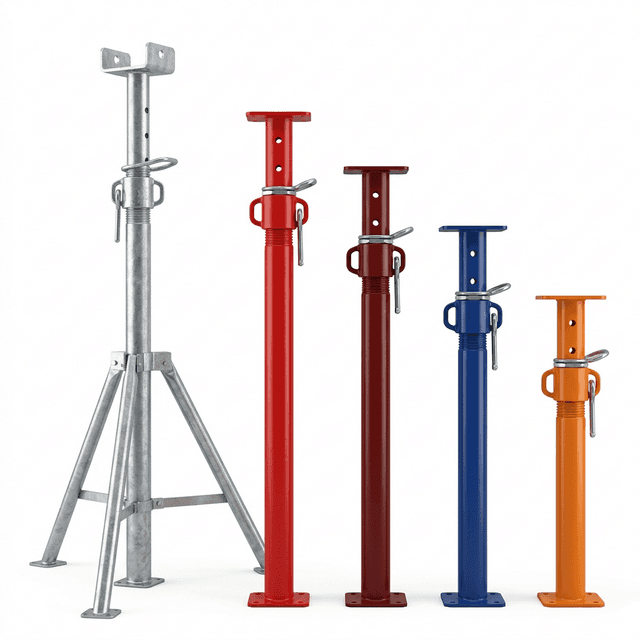
Visual context
Product context before the buying shortcut
Best for AU, UK, and export buyers who need a fast shelf benchmark (including acrow props for sale ebay marketplace shorthand, acrow props for sale gumtree marketplace shorthand, acrow props ebay australia marketplace shorthand, acrow props australia location shorthand, acrow props adjustable for sale shorthand, acrow props and strongboys for sale bundle shorthand, acrow props size shorthand, acrow prop sizes australia shorthand, acrow prop sizes uk shorthand, acrow prop size chart, acrow props 0.6m 1.05m boundary checks, acrow prop size 4, acrow prop size 5 boundary briefs, acrow props for sale cardiff location shorthand, acrow props for sale glasgow location shorthand, acrow props for sale dublin location shorthand, and acrow props for sale in lagos import-delivery shorthand) but still need enough evidence to avoid buying the wrong prop size, misreading a merchant label, or treating a 1m shorthand query as a standard size class.
The visual is there to keep the page grounded in the actual product while the tables, source stack, and range checks carry the technical buying evidence.
Public sample ladder
Market sample by size
Selected tool context
Current profile
No. 1
Official range
1.60m to 2.80m
WLL at min extension
34.0kN
WLL at max extension
13.0kN
Nominal mass
17kg
Official WLL profile
No. 1Tool layer
Acrow prop price checker
Pick market, size, and quantity. eBay, Gumtree, Glasgow, Dublin, Lagos, used-stock, or other shorthand searches can use shortcut buttons below.
Empty state
Start with the public size ladder, then narrow into the boundary.
The calculator is intentionally opinionated: it defaults to the most common price-intent reading. If your shorthand query was "acrow prop for sale", "acrow prop buy", "acrow prop pins for sale", "acrow prop tripods for sale", "acrow prop hobart for sale", "acrow prop no 2", "acrow prop number 2", "3m acrow props", "acrow prop size 3", "acrow props design capacity", "acrow prop 3 capacity", "acrow prop capacity", "acrow prop capacity uk", "acrow props capacity", "acrow prop load capacity", "acrow prop weight capacity", "acrow prop axial capacity", "acrow prop capacity australia", "acrow props for sale ebay", "acrow props ebay australia", "4m acrow props", "acrow prop size 4", "acrow prop size 5", "acrow prop no4 size", "1m long acrow prop", "1m acrow prop", "2.8m acrow prop", "acrow prop lengths", "acrow props for sale ballarat", "2nd hand acrow props for sale", "acrow props for sale glasgow", "acrow props for sale dublin", "acrow props for sale in lagos", "130mm acrow prop buy", "acrow prop diameter", or "acrow prop dimensions", use the same canonical page to translate that phrase back into size number, range, delivery scope, and when needed condition checks before you treat the shelf price as buy-ready.
Report summary
The short answer to an “acrow prop for sale”, “acrow prop size 1”, “acrow prop size 1 for sale”, “acrow props size 1 for sale”, “acrow prop buy”, “acrow props ebay australia”, “acrow prop pins for sale”, “acrow prop tripods for sale”, “acrow prop hobart for sale”, “acrow props beenleigh for sale”, “acrow props for sale ballarat”, “acrow prop no 2”, “acrow prop number 2”, “acrow prop price”, “acrow props price”, “3m acrow props”, “acrow props design capacity”, “acrow prop 3 capacity”, “acrow prop capacity”, “acrow prop capacity uk”, “acrow props capacity uk”, “acrow props capacity”, “acrow prop load capacity”, “acrow prop weight capacity”, “acrow prop axial capacity”, “acrow prop capacity australia”, “4m acrow props”, “1m long acrow prop”, “2.8m acrow prop”, “acrow prop lengths”, “2nd hand acrow props for sale”, or “130mm acrow prop buy” or “acrow prop diameter” or “acrow prop dimensions” query is useful only after you lock the market, the size label, the extension range behind that label, the pin, tripod, and accessory scope when relevant, and for used stock, the condition gates behind that unit.
The cards below compress the live shelf samples, the official Acrow manual, the regulator guidance, the inspection thresholds, and the cross-check spread into the numbers that actually move a buying decision.
3m decision layer
What the current sources actually support when the brief says 3m
Reviewed and updated 18 April 2026. The current AU and UK public ladders, the official Acrow manual, and the public supplier pages do not all mean the same thing around 3m. This section separates what is proven, what is only a public shelf signal, and what still needs direct supplier confirmation.
No. 3 capacity decision layer
What the evidence really says when the brief is "acrow props design capacity", "acrow props capacity uk", or "acrow prop 3 capacity"
Core No. 3 evidence refreshed 5 June 2026, with additional weight-versus-capacity boundary checks refreshed 10 May 2026. This section closes the remaining gap in the earlier page: unit mismatch risk (kN-versus-tonne), UK BS 5975 control boundaries, AU SWMS trigger conditions, temporary-works design triggers, and unresolved cross-standard proof on public size-3 listings. Where a public listing does not expose exact class/test evidence, status remains "待确认 / pending confirmation".
4m decision layer
What the refreshed sources actually change when the brief says 4m
Rechecked on 28 April 2026. The earlier page already established that 4m crosses the reviewed size-3 ceiling. This section adds the buying detail that still mattered: the shelf-price step into size 4 is moderate, the published load envelope is not stronger, exact 4.00m WLL is not publicly interpolable, the SWMS trigger boundary can switch on, and the longer family changes handling scope as well.
Evidence layer
Public price tables, official ranges, and the size-1 cross-check sit in one place so the tool result is auditable.
This is the trust layer: the calculator stays useful because the page shows where the number came from, what it does not include, and where the official manual disagrees with merchant labels.
Decision boundaries
The useful question is not just "what is the acrow props price?" It is where that number stays usable, and where it stops being decision-grade.
These additions turn the current public research into actionable buying limits: size-family coverage, unresolved alias handling, tax and basket drift, engineering trigger points, and the public data gaps that should stay explicit instead of being guessed.
Methodology
The tool is intentionally narrow: it prices the public page you can see, then checks that price against the official size logic.
That split keeps the page honest. The calculator solves the immediate buying question, while the methodology explains why a shelf price is sometimes enough and sometimes unsafe to use. The source stack is reviewed every 6 months or sooner if a cited manual, regulator page, or merchant listing changes materially.
Decision flow
Price is only step one of a temporary works decision.
Loads
HSE says prop type, size, number, and spacing all start with the loads acting on the props, including side loads.
Geometry
Match the market label against the official range so you do not buy the wrong prop geometry.
Support
The Acrow manual calls out the original prop pin, height/200 plumbness, centered loading, bearing, and bracing as non-negotiable.
Quote
Once accessories, freight, or export handling matter, move from shelf sample to direct quote.
Comparison and risks
The page should not just show a number. It should show when the number is safe to use and when it becomes a false shortcut.
These are the tradeoffs buyers actually face: shelf sample versus official manual, public page versus quote email, tax-mode drift, and convenience versus temporary works risk.
Range mismatch risk
Some merchant size labels stretch past the official Acrow range. Confirm the closed and open length before using the price.
Accessory and delivery drift
Updated 22 April 2026: reviewed UK pages still split pins/collars from base props and currently show pin spread around GBP2-GBP4 ex VAT, while reviewed AU sample pages show separate pin/collar signals around a GST-included base price. Public pages can frame budget direction, but they still do not prove cross-supplier pin material/tolerance equivalence.
2nd-hand condition drift
Used stock can fail before price becomes relevant: the Acrow manual reviewed on 18 April 2026 isolates dents above 4mm, rejects bent pins, and limits end-plate camber to 1mm.
Documentation gap on used lots
The official second-hand sources rechecked on 18 April 2026 still expect condition disclosure, instructions, and available records for work-use supply. A used lot without that trail is not equivalent to a clean merchant SKU.
Hobart freight-chain drift
Updated 11 April 2026: official Tasmania sources point to Devonport/Burnie-linked freight corridors plus Bass Strait ferry legs, but public prop listings still do not provide a reliable Hobart postcode stock/rate ladder. Treat city intent as quote-required logistics scope.
Beenleigh location alias drift
Updated 26 May 2026: Acrow contact/capability sources still confirm Beenleigh/Yatala network coverage, but reviewed public listings still do not publish a normalized Beenleigh postcode stock/rate ladder. Treat "Beenleigh for sale" as logistics scope, not as a separate size class.
Local pickup and restraint
A near-1m Brendale collection still needs vehicle, stillage, and tie-down planning: official No. 00 is 10kg each and 400kg per 40-prop stillage, and the NTC guide says any load that needs two people to lift onto the vehicle also needs to be tied down.
Tax-mode ambiguity
On 18 April 2026, reviewed AU and UK pages did not present tax the same way, and one AU page showed conflicting on-page and structured-data cues. Keep GST or VAT mode attached to the number.
Load drop at extension
Official WLL falls as extension grows. The price alone does not tell you if the prop still suits the load case.
Temporary works scope
HSE says spacing and prop selection depend on the actual loads acting on the props, including side loads, and WorkSafe Queensland flags wrong pins and side loads as failure paths.
Export boundary
Once freight, packing, and accessories dominate the brief, public shelf pricing is the wrong decision layer.
| Channel | Best for | What it still misses |
|---|---|---|
| eBay listing / buyer-protection flow | Marketplace dispute context for an "acrow props for sale ebay" listing | Useful for eligible non-arrival or not-as-described disputes under eBay policy, and sometimes for seller-side ACL context, but it does not prove WLL, condition, safe-use records, temporary-works suitability, or condition-normalized market price. |
| Official Acrow manual | Knowing the nominal range, mass, and WLL by size | No market price. The guide also says a qualified person still needs to review the design. |
| AU merchant / manufacturer pages | Fast Australia shelf benchmark | Reviewed AU sale pages show GST-included copy, but they do not normalize hire or accessory bundle pricing across merchants and at least one current page shows conflicting structured tax metadata. |
| UK merchant pages | Fast UK unit benchmark | The reviewed page shows ex/inc VAT, accessories are sold separately, and bulk discounts start above GBP2000 ex VAT, but delivery cost still needs explicit basket confirmation. |
| Official transport guidance | Planning Brendale or other local pickup restraint | Useful for mass, stillage, and tie-down logic, but it does not confirm local stock, suburb delivery rates, or collection slots. |
| NHVR heavy-vehicle loading rules | Truck-based pickup or delivery restraint planning | Clarifies the heavy-vehicle force standard, but it does not confirm stock, collection windows, or the right prop size. |
| Official climate and local transport planning | Townsville wet-season delivery-risk framing | Shows rainfall/route risk context, but does not provide prop-level postcode stock ladders or suburb delivery-rate cards. |
| SafeWork NSW formwork controls | NSW pre-pour document gate (design safety report + fresh certification) | Defines compliance and timing controls, but does not provide prop pricing or class equivalence. |
| Temporary works review and quote email | Site-specific quantity, spacing, and support logic | Slower than a shelf sample, but this is the only defensible path when loads and geometry matter. |
FAQ
High-frequency buyer questions before the first email
The FAQ is not filler. Each answer exists to reduce a specific mistake buyers make when they try to turn a shelf price into a quote, a spacing rule, or a final procurement decision.
Conversion layer
Use the tool to frame the question, then email the exact brief while the size and range are still fresh.
Acrow prop pricing gets cleaner when the first email locks the market, size number, closed and open range, quantity, and any accessory or freight scope.
Include these details
- Market: Australia, UK, or another export destination
- Size number plus the closed and open range you actually need
- Quantity and whether the requirement is one-off replacement or batch supply
- Whether the stock is new, mixed-yard, or second-hand, plus photos, condition notes, and any available records
- Any heads, pins, or accessories required with the props
- Pickup or delivery suburb plus vehicle or unload constraints if the job is local, or import-delivery route details for Lagos (for example Beenleigh, Townsville, Hobart, Brendale, Cardiff, Glasgow, Dublin, or Lagos)
- Whether supply needs to be loose, banded, or stillaged
- Whether the order must align with an existing temporary works setup
Source stack used here
Acrow technical manual PDF (hosted 2025/03, release notes show Issue C 09/2024)
official specification
Acrow Deck technical manual (Issue L, December 2025 PDF)
official system specification
Acrow current product page (6 sizes, 720mm-4900mm, 7kN-50kN)
official manufacturer product metadata
Acrow hardware and consumables catalogue (Oct 2025)
official manufacturer product geometry reference
Acrow legacy product post (15 Aug 2014, 5 sizes, 1050mm-4900mm, 7kN-42.5kN)
official legacy page metadata
Safe Work Australia key WHS statistics (2025 insight)
official national WHS dataset
Safe Work Australia key WHS statistics 2025 PDF (published October 2025)
official national WHS dataset
HSE temporary works FAQ
official safety guidance
HSE temporary works topic page
official safety guidance
HSE principal contractor duties (CDM 2015)
official duty-holder guidance
HSE inspection of work equipment (PUWER regulation 6)
official equipment inspection guidance
HSE scaffolding information and inspection expectations
official scaffold guidance
Work at Height Regulations 2005 (Regs 4, 5, and 12)
official legislation
HSE work-related fatal injuries overview
official injury statistics
HSE fatal injuries in Great Britain 2025 PDF
official injury statistics
GOV.UK VAT rates
official tax guidance
ACCC price display guidance (single total price and GST display)
official consumer pricing guidance
ABF GST and other taxes on imported goods
official import tax guidance
ABF import processing charge
official import declaration charge guidance
GOV.UK tax and customs for goods sent from abroad
official UK import tax guidance
GOV.UK trade tariff service
official UK customs duty guidance
UK Trade Tariff commodity 7308400000 (equipment for scaffolding, shuttering, propping or pit-propping)
official UK tariff commodity record
GOV.UK finding commodity codes for imports and exports
official UK commodity-classification guidance
HSE structural stability during demolition/alteration
official safety guidance
HSE second-hand products guidance
official second-hand equipment guidance
Safe Work Australia model code page (plant risks)
official plant code metadata
Safe Work Australia plant code (November 2024 PDF)
official second-hand plant guidance
Safe Work Australia model code page (construction work)
official construction code metadata
Safe Work Australia model WHS laws page
official model-law adoption guidance
WorkSafe Victoria SWMS guidance page
official Victoria high-risk construction guidance
WorkSafe Victoria OHS Act and regulations page
official Victoria regulatory status guidance
Safe Work Australia construction work code (November 2024 PDF)
official high-risk construction guidance
Safe Work Australia guide to formwork
official formwork guidance
Safe Work Australia general guide for formwork and falsework
official formwork guidance
Work Health and Safety Regulations 2011 (latest text)
official legislation
BS 5975-1:2024 product page (BSI Knowledge)
standard metadata
BS 5975-2:2024 product page (BSI Knowledge)
standard metadata
BS 5975:2019 product page (BSI Knowledge, withdrawn)
standard history metadata
BS EN 1065 product page (BSI Knowledge)
standard metadata
Doka floor-prop user information (08/2025 PDF)
manufacturer EN 1065 class/load reference
Doka floor prop extension 0.50m user information (04/2026 PDF)
manufacturer extension-load boundary reference
WorkSafe Queensland formwork code of practice
official safety guidance
WorkSafe Queensland scaffolding code of practice 2021
official scaffold guidance
BOM climate statistics table for Townsville Aero (means generated 2026-02-05)
official climate baseline
BOM Townsville climate profile (monsoon and cyclone context)
official climate guidance
Townsville LDMG evacuation sub-plan (Version 7, reviewed July 2025)
official local transport risk planning
Port of Townsville annual report 2024-25
official regional freight context
SafeWork NSW formwork installation/design/certification safety alert
official regulator alert
SafeWork NSW formwork code of practice (PDF)
official regulator code
NTC load restraint guide for light vehicles
official transport guidance
Heavy Vehicle (Mass, Dimension and Loading) National Regulation (in-force compilation)
official heavy-vehicle loading law
NHVR load restraint guide
official heavy-vehicle transport guidance
NHVR loading performance standards
official heavy-vehicle transport guidance
NTC Heavy Vehicle National Law page
official heavy-vehicle law status
WorkSafe Tasmania construction work code page
official Tasmania construction WHS guidance
Tasmania State Growth Burnie-Hobart freight corridor strategy
official Tasmania freight corridor guidance
Tasmania Treasury TT-Line briefing (RTI release PDF)
official Tasmania freight service briefing
Victoria Scaffolding size pages
public AU shelf sample
Victoria Scaffolding size 00 page
public AU short-prop sample
Victoria Scaffolding size 0 page
public AU shelf sample
Australia Scaffolding & Formwork size 3 page
public AU shelf sample
Australia Scaffolding & Formwork size 4 page
public AU shelf sample
Victoria Scaffolding size 3 page
public AU shelf sample
Victoria Scaffolding size 4 page
public AU shelf sample
Australia Scaffolding & Formwork size 00
public AU short-prop cross-check
Australia Scaffolding & Formwork size 0
public AU shelf cross-check
The Metal Store acrow props
public UK shelf sample
Scaffolding Supplies For Sale acrow props
public UK range cross-check
Scaffolding Supplies For Sale size 0 product page
public UK size-0 cross-check
Scaffolding Direct size 1 page
public UK cross-check
Timberfix size 1 page
public AU cross-check