Kwikstage DirectKwikstage Direct
  • Compatibility
  • About
  • Insights
Open email app
WhatsApp
Kwikstage DirectKwikstage Direct

Kwikstage Direct is a direct kwikstage scaffold supplier for Australia, New Zealand, and the UK. Enquire about kwikstage standards, ledgers, transoms, steel planks, and compatible system supply by email.

Email

[email protected]
Open email app
Commercial Pages
  • Acrow props
  • House scaffolding
  • Standards
Buyer Topics
  • Ledgers & transoms
  • Steel planks
  • Galvanized kwikstage
  • Compatibility
Company
  • About
  • Contact
  • Insights
Legal
  • Cookie Policy
  • Privacy Policy
  • Terms Of Service
© 2026 Kwikstage Direct. All Rights Reserved.
scaffold standard / 3m standard scaffolding weight

Scaffold standard guide with a 3m standard scaffolding weight quick check.

First-screen quick starter
Pick the intent, confirm the quantity, and check whether the 3m standard scaffolding weight clue is enough before scrolling into the deeper evidence sections.

120+ is this page's direct-review trigger, not a scaffold-code limit.

Result preview

Default 3m path preview

A 3.0m top-up with no match risk usually stays quote-ready. Switch the preset if the real brief is fit-up or compliance.

Open the full toolReview evidence

Use the tool first when the query starts as scaffold standard, 3m standard scaffolding, 3m standard scaffolding weight, kwikstage standards, or a matching-led replacement question, then use the same page to separate public size tables from compliance rules, weight spread, and inquiry-ready next steps before you email.

Quick checkEvidence layerRisk mapFAQEmail brief

Research updated 26 March 2026. Core claims below link back to Standards Australia, Safe Work Australia, WorkSafe New Zealand, UK HSE, and current supplier or system-catalogue pages reviewed for this change.
AS/NZS 1576.1:2019Model Code of Practice: Managing the risk of falls at workplacesScaffolding safety topicGuide to Scaffold Inspection and MaintenanceScaffolding in New ZealandScaffoldsKwikstage StandardsScaffold Standard product pageKwikstage Scaffold System catalogue

3

public catalogues listing 3.0m

KwikUp, ScafEast, and APAC all publish a 3.0m standard.

16.0-17.5 kg

reviewed 3m standard scaffolding weight spread

Catalogue weights vary, so confirm actual stock before matching by length alone.

650 kg

example design load on one standard

WorkSafe New Zealand's medium-duty example combines 300 kg live load with 350 kg dead load, showing that member mass is not capacity.

>4m

licence and handover trigger

Safe Work Australia uses the more-than-4m fall threshold for licensing and written completion confirmation.

30 days

minimum re-inspection cycle

The model code calls for competent-person inspection at least every 30 days and after incidents or repairs.

Current

AS/NZS 1576.1 status reviewed

Standards Australia lists AS/NZS 1576.1:2019 as current and replacing the 2010 edition.

[email protected]
Run the scaffold standard checkAsk a standards question
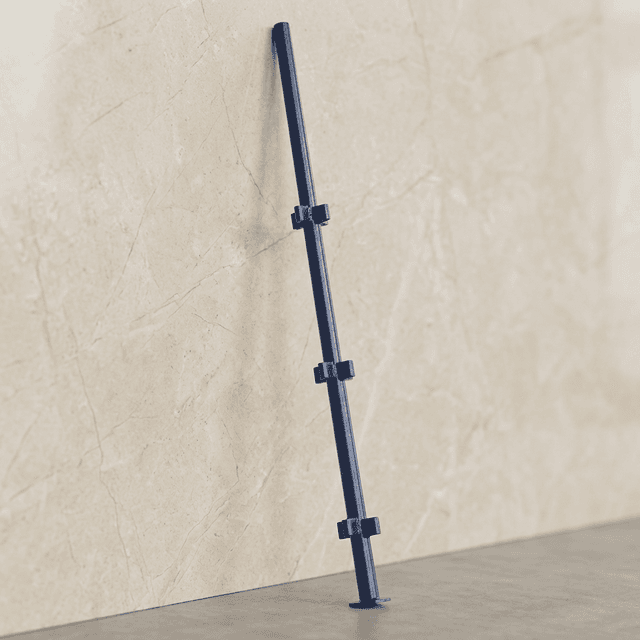
Blue painted kwikstage standard showing cup and V-pressing detail

Tool first, report second

Check whether your 3m standard scaffolding brief is quote-ready, match-sensitive, or compliance-led before you email.

Core conclusion
3m standard scaffolding weight is a useful catalogue clue, but it is not a safe replacement for fit-up review or compliance evidence.

Buying answer

Reviewed catalogues confirm that a 3.0m standard is a normal product length.

Risk answer

Matching, duty class, export scope, and compliance review still sit above the catalogue label.

Scaffold standard quick check

Route the next step before you treat 3m as a complete answer.
Start from the exact component length, then tell the tool whether you are topping up stock, matching an existing system, or really asking a compliance question.

Public catalogues confirm 3.0m is normal, but the tool still checks whether the query is match-led or code-led.

Use compliance only when the real question is code, duty class, or sign-off.

If the new standards must fit your current yard, the result will shift into a compatibility check.

Match-existing finish is a signal that the order may not be a simple stock lookup.

Other export markets trigger a boundary path because freight and compliance details expand beyond the catalogue view.

Good for routine buying signals. Large rollouts should move into a direct brief.

Use whole standards only. Above 120 uses this page's direct-review rule; it is not a regulatory scaffold limit.

Review the evidence first

Result panel

Your next step will appear here.
The check is designed to answer the alias intent directly: is this a routine 3m buying question, a match-existing risk, or a compliance-led query?

Default preview

A 3.0m replacement brief in Australia with no matching risk will usually stay quote-ready. The moment matching, export, or code language appears, the page routes you into a safer path.

Requested length

3.0m standard

Reviewed catalogues show 3.0m as a standard public length.

Commercial context

Replacement / top-up

No, simple supply / Painted / Australia

Canonical route

This page keeps scaffold standard and 3m standard scaffolding on one canonical URL so the tool and report layers reinforce each other instead of competing.

3m is a normal sale length
Yes

Three reviewed public catalogues list a 3.0m kwikstage standard and a 16.0 kg to 17.5 kg public weight spread, so "3m standard scaffolding weight" belongs on the canonical scaffold standard page.

Kwikstage StandardsScaffold Standard product pageKwikstage Scaffold System catalogue
3m does not define the bay
Ledgers and transoms do

APAC lists ledger lengths from 0.56m to 2.44m and transoms from 0.56m to 2.44m, so the 3m label identifies the vertical member rather than the bay span or platform width.

Kwikstage Scaffold System catalogue
Weight is not safe load
16-17.5 kg is not the capacity number

WorkSafe New Zealand's medium-duty example puts 300 kg live load plus 350 kg dead load on one standard, for a 650 kg design load with one loaded lift. That is why a 3m member weight is a handling clue, not a safe-load answer.

Scaffolding in New ZealandModel Code of Practice: Managing the risk of falls at workplaces
Mixing and market still need approval
Use manufacturer or competent review

Safe Work Australia says prefabricated scaffolds should be of the same type and not mixed unless the manufacturer approves the mix, the inspection guide expects written competent-person approval where mixing occurs, and UK HSE sends proprietary system scaffolds back to manufacturer instructions.

Model Code of Practice: Managing the risk of falls at workplacesGuide to Scaffold Inspection and MaintenanceScaffolds
Suitable and not suitable
Use the page to speed up the first decision, not to replace competent scaffold review.
Useful when
  • Checking whether 3.0m is a normal kwikstage standard length in public market data.
  • Preparing a first email for replacement standards when length, finish, and quantity are mostly known.
  • Separating code research from product research before a standards inquiry goes further.
Escalate beyond the page when
  • Signing off a scaffold design or proving that a 3m standard is compliant on its own.
  • Guaranteeing interchange across local kwikstage variations using only public product tables.
  • Replacing engineering, temporary works, or competent inspection obligations.
Why the alias stays merged
3m standard scaffolding and scaffold standard lead to the same real decision: buy, match, or escalate.

Direct quote path

Use when: The length is already known, matching is not sensitive, quantity is moderate, and the query is buying-led.

Avoid when: The question is really about interchange, export handling, or compliance sign-off.

Compatibility check path

Use when: The new standard must sit with existing stock, V-pressing detail matters, or the local brand being matched is unclear.

Avoid when: You only need a simple stock and quantity check with no fit-up constraint.

Compliance-first path

Use when: The user is asking what code applies, what duty class means, or whether 3m is automatically compliant.

Avoid when: The real need is just ordering a known replacement component.

Evidence layer

3m standard scaffolding weight, fit, and compliance evidence on one page.

The purpose of this section is not to drown the buyer in text. It is to show what the public evidence confirms, what it leaves unresolved, and why the tool routes some briefs away from a simple quote path.

Research refresh

Last updated 26 March 2026. This round tightens the official evidence around `>4m` thresholds, 30-day inspection cycles, no-mixed-components rules, the difference between member mass and live design load, and the market boundary between Australian, New Zealand, and UK proprietary-system guidance.

AS/NZS 1576.1:2019Model Code of Practice: Managing the risk of falls at workplacesScaffolding safety topicGuide to Scaffold Inspection and MaintenanceScaffolding in New ZealandScaffoldsKwikstage StandardsScaffold Standard product pageKwikstage Scaffold System catalogue
3m standard scaffolding weight in reviewed supplier data
The tables below confirm that 3.0m is normal buying language and show the reviewed weight spread, while also showing why one row is not enough to settle interchange or design decisions.
SupplierListed standard lengths3.0m public weightUseful noteSource
KwikUp0.3m, 0.5m, 1.0m, 1.5m, 2.0m, 2.5m, 3.0m17.5 kg48.3 OD x 4 mm tube and V pressings at 495 mm centres
Kwikstage Standards
ScafEast0.5m, 1.0m, 1.5m, 2.0m, 3.0m17.5 kgCurrent public page lists painted and HDG codes for 0.5m to 3.0m rows
Scaffold Standard product page
APAC Safety0.3m, 0.5m, 1.0m, 1.5m, 2.0m, 2.5m, 3.0m16.0 kg495 mm V-pressing centres and either 48.3 x 4.0 mm S235 or 48.3 x 3.5 mm S355 tube
Kwikstage Scaffold System catalogue
Public length ladder
3.0m sits at the top of the most common published size ladder, but not as a universal regulatory mandate.
0.5m1.0m1.5m2.0m2.5m3.0mPublic catalogue ladder
Weight spread warning
Public 3.0m weights are close enough to confirm the component class and different enough to block lazy interchange assumptions.
16.0 kg17.5 kg17.5 kgAPACKwikUpScafEastReviewed 3.0m public weights
Risk register
The point of the page is not only to answer the query but to prevent the common misreads that make scaffold standards expensive later.
RiskWhy it happensSignalMitigation
Matching by length only3m standard scaffolding sounds specific, so buyers assume every 3.0m member is equivalent.Existing yard or local brand must be matched.Email photos, geometry notes, finish, and the exact system being matched before treating the order as routine. Safe Work Australia also says prefabricated scaffolds should not be mixed unless the manufacturer approves it.
Confusing bay duty with vertical choiceDuty classes are easier to find publicly than scaffold design detail, so they get overused as a buying shortcut.Questions mention light, medium, or heavy duty but not the actual system or arrangement.Use duty classes to frame the job, then escalate the scaffold design and competent review questions separately.
Using public weights as proof of interchangeCatalogue tables look precise even when suppliers publish different weights for the same 3.0m length.The decision is based on one table row instead of the full component context.Treat weight as a screening clue only and confirm actual stock details directly.
Treating member mass as load capacitySearchers ask for weight, then assume the same number governs the safe load on the scaffold standard in use.The question jumps from 16.0 kg to 17.5 kg straight to whether one standard is safe for medium or heavy-duty work.Keep self-weight and design load separate. WorkSafe New Zealand's medium-duty example uses 300 kg live load plus 350 kg dead load on one standard, so use design evidence and manufacturer instructions instead of the member mass.
Treating 3m as a height or licence shortcutBuyers hear 3m and assume it answers the finished scaffold height, licence boundary, or handover requirement.Questions jump from component length straight to whether the job is above or below 4m.Separate component length from completed scaffold fall exposure, then use the compliance-first path for licensing and handover questions.
Export or bulk boundary hidden inside a simple queryThe search starts as scaffold standard, but the commercial scope is freight, packaging, or project rollout.Quantity is large or the market is outside the normal catalogue context.Move directly into an email brief with market, quantity, and pack-out constraints.
Risk summary
Most mistakes come from compressing four different questions into one short alias.
Length onlyDuty confusionWeight overreadExport boundary
Related pages that usually come next
These links keep the inquiry on one connected path without spinning out a separate alias page.

kwikstage compatible scaffold systems

Compatibility

Start a kwikstage compatibility inquiry for buyers who need new supply to align with existing scaffold systems and component inventories.

Open page

galvanized kwikstage for sale

Galvanized kwikstage

Review galvanized kwikstage supply messaging for buyers balancing finish choice, corrosion resistance, and component compatibility.

Open page

house scaffolding

House scaffolding

Use the house scaffolding tool for 5 bay scaffold and 2 story house scaffolding briefs, compare access and compliance boundaries, then email the right inquiry.

Open page

FAQ

Answer the alias explicitly, then keep the decision moving.

The FAQ is grouped by intent so a buyer does not have to read a glossary to find the real next step.

Alias and search-intent questions

Buying, matching, and component questions

Compliance, load, and risk questions

Direct inquiry

Turn the result into a clean scaffold standard email brief.

Standards inquiries move faster when the first email states the target length, whether existing stock must match, the finish, the quantity, and whether the question is buying-led or compliance-led.

[email protected]
Open email app
Discuss by email
Include these details
  • Requested standard length, especially if the brief starts from 3m standard scaffolding or 3m standard scaffolding weight
  • Whether the order must match an existing kwikstage system or local brand
  • Painted, galvanized, or match-existing finish requirement
  • Approximate quantity and whether the need is top-up, fresh package, or export
  • Any compliance, temporary works, or site-specific constraints that cannot be solved from a catalogue table
What the tool adds

The generated email keeps the selected length, market, quantity, finish, and result path together so the alias phrase does not hide the real commercial question.

Last research refresh: 26 March 2026.

Why the CTA stays email-led

Matching risk, export context, and compliance questions all improve when the first contact includes exact job context instead of another shallow quote form.

That keeps the single canonical URL useful for both the tool intent and the deeper decision intent.